How to build a scalable food processing machinery strategy that evolves with your production demands, not against them.
Most food manufacturing facilities are designed for the volume they need today. The problem is that “today” rarely lasts five years. Demand shifts, product lines multiply, and a line that felt appropriately sized at launch starts becoming a bottleneck around year three. By then, the fix is expensive: major equipment replacement, facility downtime, and a production schedule thrown into chaos.
The alternative is designing your line around the concept of flexible production line design from the start, choosing scalable food processing machinery and modular industrial equipment that grows with you rather than requiring a full rebuild when demand changes.
Explore how GBM’s approach to scalable food processing machinery gives manufacturers a documented growth path from first batch through full-scale production.
What “Future-Proof” Actually Means (And What It Does Not)
Future-proof does not mean buying the biggest equipment available and hoping volume catches up. Oversized machinery sits underutilized, consumes more floor space than necessary, and often runs inefficiently at low capacity points.
Future-proof means your line is built on a system architecture that can absorb change without catastrophic disruption. That architecture has three components:
- Modular industrial equipment with standardized interfaces Each piece of equipment in a modular system connects to adjacent equipment through defined, consistent interfaces at each level – mechanical, electrical, and controls. When you need to add capacity, you add a module with the same interface spec. When you want to upgrade a component, you swap it for a newer version without rewiring the whole line. This is the engineering foundation that makes flexible production line design possible.
- Scalable food processing machinery that performs at every capacity tier Scalability is not just about adding more equipment. It is about equipment that performs correctly whether you are running at 20% of designed capacity or 100%. Generally, scalable food processing machinery is rated for full throughput but maintains process consistency at lower run rates, critical for operations that serve seasonal demand or multiple product categories at varying volumes.
- A production line designed for phased expansion A future-proof line has room to grow in defined directions. Before you specify equipment, you map out how the line could expand: what gets added, in what sequence, and what the physical and operational constraints are at each growth phase. This is the difference between a line that grows and a line that gets rebuilt.
The Three Growth Scenarios a Future-Proof Line Handles
Scenario 1: Volume Scaling
You launch with one line running at 60% capacity. Demand grows steadily over 18 months until you are running at full capacity across all shifts. With modular equipment and scalable food processing machinery in the original specification, you add a second processing module, installed during a planned maintenance window, and the line is back to full operation without a production halt.
Scenario 2: Product Line Expansion
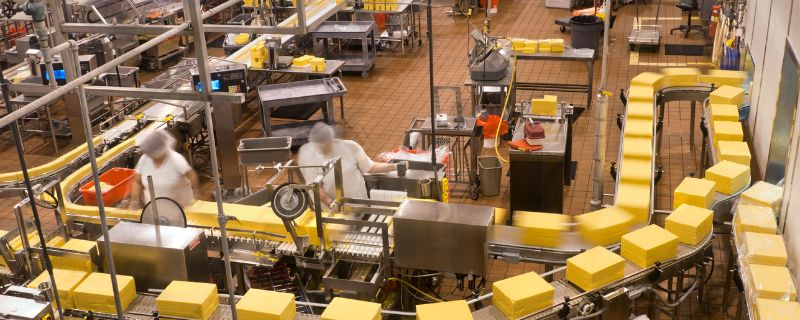
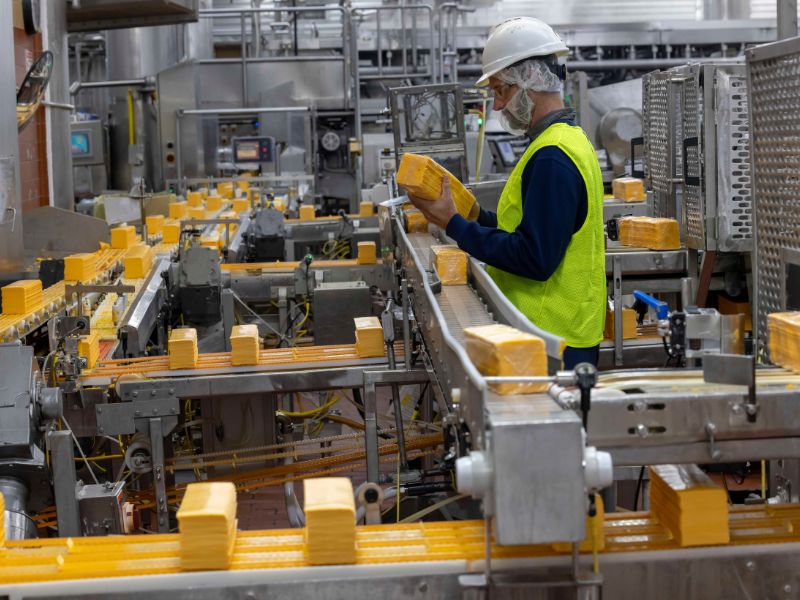
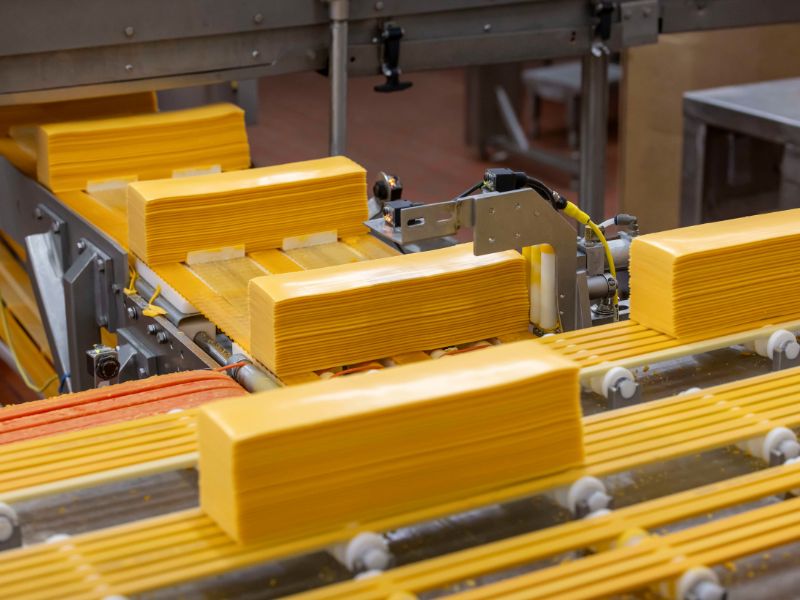
You start with one product category, processed cheese. Then a co-packing opportunity arrives for a second category. A future-proof line handles this without a major reconfiguration because the core equipment handles multiple SKUs, and the modular architecture supports a parallel production path. You run both lines simultaneously rather than shutting one down to retool.
Scenario 3: Technology Upgrade
A newer, more efficient version of a critical piece of equipment becomes available mid-life of your current line. With modular industrial equipment and standardized interfaces, you swap the component out in a defined window. The rest of the line runs uninterrupted. With an integrated, non-modular system, an upgrade like this can take months and require a complete line shutdown.
Designing Your Line: The Planning Checklist
Before you specify equipment or engage an equipment partner, work through these questions:
Volume and growth trajectory
- What is your current annual production volume?
- What is your projected volume in 3 years? In 5 years?
- Is growth seasonal, steady, or unpredictable?
Product flexibility requirements
- How many product categories do you run today? How many do you plan to add?
- Do product changeovers require reconfiguration of the line, or is the equipment multi-purpose?
- What are your changeover time tolerances?
Floor space and physical constraints
- What is your available footprint for new equipment?
- Are there physical limitations, ceiling height, load-bearing floor capacity, utility access, that constrain equipment sizing?
- Do you have room to add a second processing module without relocating existing equipment?
Integration requirements
- Will new equipment need to connect to existing systems, controls, conveyors, sanitation?
- Is your facility’s utility infrastructure sized to support full-scale equipment operation?
- Do you need regulatory compliance documentation before commissioning?
Maintenance and uptime targets
- What is your acceptable downtime window for planned maintenance?
- What is your unacceptable downtime threshold for unplanned failures?
- How do you need equipment to perform during changeovers?
Why Companies Build the Wrong Line (And How to Avoid It)
The most common mistake in food processing line design is optimizing for today’s volume rather than tomorrow’s trajectory. Equipment specifications get written based on what the line needs to do right now, and the future-growth clause gets deferred to “Phase 2.” Phase 2 rarely gets the same budget attention as Phase 1, and it usually arrives at the worst possible time: when capacity is maxed out and downtime is most costly.
A better approach is to treat growth as a first-class design requirement. When you spec equipment, you are not just buying what handles today’s volume. You are buying equipment that can absorb a 30% to 50% volume increase without a major equipment overhaul. GBM’s scalable food processing machinery is designed for this: performance that holds across a range of capacity points, with modular components that can be added as demand warrants.
Explore more about GBM’s approach to flexible production line design.
What Flexible Production Line Design Looks Like in Practice
A line designed for flexibility has four visual and operational markers:
- Standardized equipment modules — components that look and connect the same way across the line, regardless of when each was added
- Clear expansion pathways — defined zones where new modules can be added without disrupting existing equipment
- Controls integration — a unified controls architecture that lets new equipment communicate with the existing system without custom engineering
- Commissioning documentation that travels with the line — as equipment is added or swapped, the system’s operating history stays coherent and auditable
GBM’s solutions are designed to support these principles. When you spec a GBM line, you are not just buying equipment. You are buying a system architecture with documented growth paths.
Ready to Design a Line That Grows With You?
GBM’s process engineering team works with food manufacturers at every stage, from greenfield facility design through existing plant expansion, to specify, configure, and commission scalable food processing machinery that performs from first batch through full-scale production.
If you are planning a new line or evaluating an upgrade to an existing one, the right time to ask the future-proof question is now, not when you are already at capacity.
Explore GBM’s core products or request a consultation to start the conversation.
Related reading: If you are also managing the equipment upgrade process, see our guide on How to Integrate New Equipment Without Halting Production.